More Than Words: A Sojourner’s Reflection on Reconciliation and Responsibility

Published by Abdulmalik Nuhu, Founder and Executive Director, Mamo Memorial Peace Foundation Inc. June 2026 | National Indigenous Peoples Month

This is the month when people across Canada gather to celebrate Indigenous peoples, their histories, their cultures, their resilience, and their continuing presence on these lands. It is a month that invites reflection. And for me, that reflection comes from a particular and personal place.

I am a settler. A sojourner. Someone who arrived on these lands not by birth or by ancestral connection, but by choice and circumstance, and who has found in this place something I can, at this moment in my life, call home.

That is not a small thing.

The Land I Have Come To Call Home

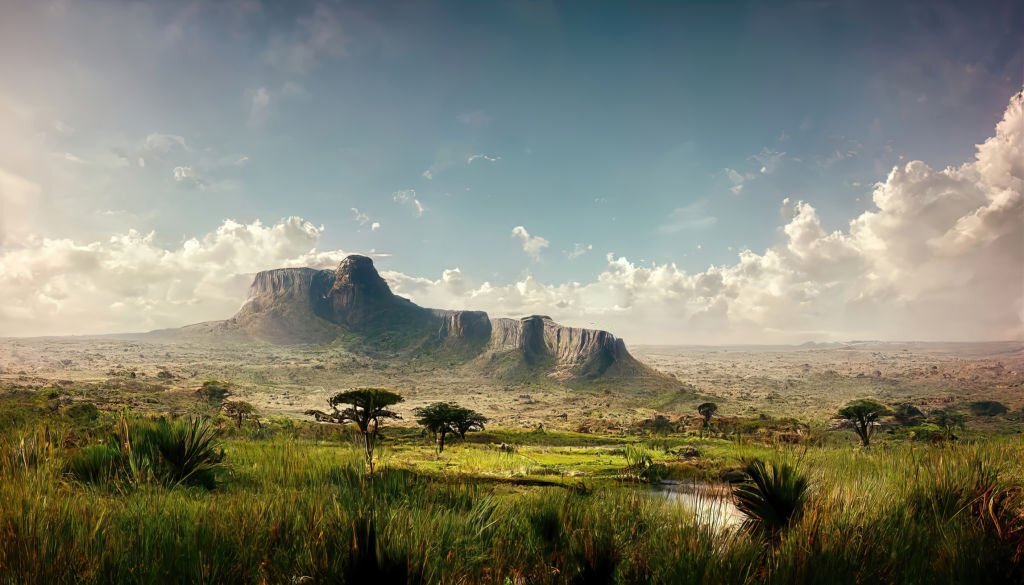
I am writing this from the Indigenous lands of Northern Manitoba, a vast and living territory that stretches from the Swan Valley northward through The Pas, through the boreal forest and the wetlands, up through the Pas-to-Thompson corridor and all the way to the cold Arctic shores of Churchill.

This land is extraordinary.

It is blessed with people. It is blessed with natural resources. It is blessed with water bodies that sustain life across generations. It is a place where species thrive, where birds fill the air, where four-footed animals move through ancient forests, where fish swim across rivers and lakes that have carried life for thousands of years. And yes, where the tiny insects that ring in your ears and buzz around your face during the summer months remind you, without apology, that they were here first too.

This is a land built to feed people, to sustain people, and to keep people growing. And I, a stranger who has arrived here, am the beneficiary of all of it.

Pausing to Pay Homage

Before I go any further, I need to pause.

I want to acknowledge, not as a formality, not as a checkbox, but as a genuine act of gratitude, the people who have lived on these lands long before I arrived, and who will continue to live on these lands long after I am gone. The Cree Nation. The people of Opaskwayak. The communities along this corridor whose ancestors read the sky, read the seasons, and read the land in ways that sustained entire civilizations without instruction manuals, without weather apps, without GPS.

These are people who could look up at the sky and tell you what weather was coming. People who could read the atmosphere and understand the season simply by observing the earth beneath their feet. People who carried knowledge in their bodies, in their languages, in their ceremonies, and in their relationships with the natural world.

That knowledge is not primitive. It is profound. And it deserves more than a polite sentence at the top of a meeting.

What Land Acknowledgment Actually Means

Here is where I want to be honest, because I think honesty is exactly what this moment requires.

Land acknowledgment, especially for foreigners and settlers like me who work and live on these territories, is something we must do with a great sense of responsibility. It is not a performance. It is not a ritual that ends when the microphone is passed. It is not a shield we hold up to protect ourselves from accountability.

And yet, the whole framework of truth and reconciliation has been abused over the years. It has been misused. It has been underused. It has been reduced, far too often, to a rehearsed paragraph that people recite and then promptly forget the moment the real meeting begins.

Reconciliation has been bastardized by those who want the appearance of commitment without the weight of it.

I say this not to condemn anyone, but because I believe that naming the problem clearly is the only way to move past it. And as someone who has come to this land from elsewhere, as someone who holds no inherited guilt but carries a present-tense responsibility, I feel an obligation to say: we can do better.

Reconciliation Is a Verb

Reconciliation does not end on paper. It does not live in the speeches we give at conferences or the statements we post on websites, including ours.

It lives in the day-to-day.

It lives in how you see the Indigenous person sitting across from you in a courtroom, a classroom, a waiting room, or a boardroom. It lives in whether you interact with them as a full human being with a complex story, or whether you reduce them to a statistic, a stereotype, or a problem to be managed.

It lives in whether you, as a sojourner on this land, show up for their struggles, not as a savior, but as a neighbor. Not with pity, but with solidarity. Not only in the hard moments, but especially in the moments of victory, when you stand beside them and celebrate what they have built and what they have survived.

For those of us who have come to call this land home, reconciliation is not a gift we give to Indigenous peoples. It is a responsibility we carry every day, in every decision, in every relationship we build or fail to build.

Where Mamo Memorial Peace Foundation Stands

Mamo Memorial Peace Foundation is deeply and sincerely grateful for the opportunity to exist within this space.

We are headquartered in The Pas, in the territory of the Opaskwayak Cree Nation, and our work does not happen in spite of this location but because of it. The communities we serve, the young people we walk alongside, the elders we learn from, the conversations we hold in our Community Circles, all of it is rooted in this land and in the relationships that this land makes possible.

Our commitment is not a statement. It is a direction.

We are committed to ensuring that this space remains viable, alive, and meaningful for everyone who will come after us. We are committed to putting our presence to work, not extracting from this community, but building with it. And we are committed to supporting the growth of this region with the life we have, the time we have, and the purpose the Creator has placed in our hands.

A Call to Everyone Who Reads This

If you have read this far, I want to ask something of you.

Whether you are a settler like me, a newcomer still finding your footing, a long-time resident, or an Indigenous person reading words written in your honor, I want to ask you to hold reconciliation as a living commitment, not a completed task.

Ask yourself: In the places where I have power, however small, am I using it to support Indigenous peoples and communities, or am I simply staying comfortable?

Because that is where reconciliation happens. Not in the grand gestures. In the small, daily, chosen ones.

My brothers, my sisters, my neighbors, my friends, let our actions speak louder than our words.

Abdulmalik Nuhu is the Founder and Executive Director of Mamo Memorial Peace Foundation Inc. (MMPF), a nonprofit based in The Pas, Northern Manitoba, dedicated to peacebuilding, digital inclusion, youth empowerment, and community dialogue. Learn more at mmpf.ca.

Volunteering with MMPF: How One Conversation Builds Belonging

By Abdulmalik Nuhu, Founder

What Can One Conversation Do?

Before I founded Mamo Memorial Peace Foundation, I was a volunteer.

In January 2024, I walked into the warehouse of the Food Bank of Waterloo Region for my first shift. I had been in Canada for only a few months. I didn’t know anyone in that warehouse. I didn’t fully know yet what kind of role I was stepping into.

What I learned that day, and over many days after, is that volunteering is not really about the task. It is about the conversation that happens around the task.

The cans you sort. The boxes you pack. The food you hand to someone. These are the things you came to do. But the real gift of volunteering is the conversation in the next aisle over. The story someone shares about why they’re there too. The quiet “thank you” from a person who didn’t know who you were ten minutes ago.

That is the part nobody tells you about. And it is the reason I keep saying that at Mamo Memorial Peace Foundation, one conversation can build belonging.

What I Learned as a Volunteer

I was interviewed by the Food Bank about my experience there. They asked me what my favourite part was. I said two things came to mind.

One was the work itself: the simple satisfaction of supporting people to receive food. Knowing that the bag of vegetables I packed would land on a family’s table.

The second was the people.

“The opportunity we have to talk with one another. That connection is amazing.”

That’s what I told them. It is still what I would say today.

When you volunteer, you are not just helping a community. The community is also quietly helping you. I learned about Canada, the real Canada, the everyday Canada, from the people I stood next to in that warehouse. I learned what the culture of the land actually looks like in small moments: a stranger asking about your weekend, an older volunteer teaching you the right way to fold a box, a colleague waving at you in the parking lot.

If you are new to a place, or just new to community work, those small things matter more than they sound.

Why This Shapes How We Think About Volunteers at MMPF

When we built Mamo Memorial Peace Foundation, I knew I wanted to honour what I had received.

So we designed MMPF’s volunteer programs around one simple principle: a volunteer is never just labour. They are a person bringing their whole self into a shared space, and our job is to make sure that space is safe, dignified, and full of conversation.

Here’s what that looks like in practice.

Mamo Connect — Where Young People Lead

This is our flagship dialogue program. Young people come together to talk about global citizenship, peacebuilding, and the realities of growing up in a connected world.

Volunteers in Mamo Connect aren’t just chaperones. They are listeners. They sit alongside young people, share their own stories when invited, and help create the kind of space where a 17-year-old can speak honestly without being talked over.

You don’t need to be a teacher. You don’t need to be from any particular background. You need to be willing to listen.

My Story — Bringing Resilience to Light

Through My Story, we surface the resilience that already exists in the community. Sometimes that means hosting storytelling evenings. Sometimes it means recording an elder’s reflection. Sometimes it means simply showing up at someone’s kitchen table with tea and a notebook.

Volunteers help us host, document, and amplify these stories, with the consent and direction of the storyteller, always.

Educonnect — Education as a Catalyst

We believe that education is one of the most powerful tools for community change. Educonnect volunteers help us run workshops, support facilitators, and create the conditions for people to learn from each other.

Elder Safety, Workshops, and Community Events

Whether it’s a Digital Safety Training session for elders, a community gathering during Indigenous History Month in June, or a one-time outreach at a local festival, flexible volunteers make this work possible. We do not have a paid staff army. We have people who care enough to show up for two hours on a Saturday.

What Volunteering with MMPF Actually Feels Like

Let me be honest with you about what we can and cannot promise.

We can promise you this:

  • A real welcome from a real person, not just an email auto-reply.
  • Clear instructions on what we need, and freedom to ask questions when something is unclear.
  • The chance to learn something about peacebuilding, about Treaty 5 Territory, or about yourself.
  • A team that will not leave you standing alone in a corner of a room.

We cannot promise you this:

  • That every shift will be inspiring. Some shifts are just folding chairs after an event. That’s the work too.
  • That you will see the impact of your hour immediately. Sometimes the conversation you had with one shy teenager echoes years later, long after you’ve forgotten the day.

If you came expecting glamour, this isn’t the place. If you came expecting meaning, you’re in the right warehouse.

Who We’re Looking For

There is no profile. Truly.

You can be a university student in your first year in Canada. You can be a retiree who has lived in The Pas your whole life. You can be a parent who only has Saturday afternoons. You can be an ally just starting to learn about Indigenous histories and not sure where to begin.

If you can come with an open mind and a willingness to listen, you have what we need.

When I was interviewed about volunteering in 2024, I was asked what advice I had for new volunteers. This is what I said, and it is still my answer:

“Be open to everything. Be open to learn. Be open to yourself. It’s an opportunity for you to learn a lot. And one thing I am sure is — you’re not alone.”

You will not be alone with us either.

How to Get Started

If you’re considering volunteering with MMPF, here’s the simple version:

  1. Reach out. Email us through our volunteer page or call us at +1 548-708-1276. Tell us a little about you. Even one sentence is enough.
  2. We’ll have a conversation. We want to know what you care about and what kind of contribution feels right for you. Some people want a steady weekly commitment. Some want one event. Both are welcome.
  3. You show up. That’s it. We’ll handle the rest.

A Final Word

The truth is that I started Mamo Memorial Peace Foundation because volunteering changed my life. It taught me that belonging is not something you find; it is something you build, one conversation at a time.

If you join us, you will not just be giving your time. You will be helping someone else feel, maybe for the first time in a long while, that they are not alone here.

That’s not a small thing. That’s everything.

— Nuhu

Become a volunteer → mmpf.ca/about-us/volunteer/

Support our volunteer programs → mmpf.ca/donate/

Who We Are and Why We Started: The Story Behind Mamo Memorial Peace Foundation

Who We Are and Why We Started: The Story Behind Mamo Memorial Peace Foundation

By Abdulmalik Nuhu, Founder

A Question I Asked in a New Country

When I first arrived in Canada from Nigeria to study at the University of Waterloo, I didn’t know what most of my days would look like. I didn’t know the streets, the seasons, or the small rhythms of a country that wasn’t mine yet.

But I knew one thing about myself, something my parents put into me long before I ever boarded that plane: Usually, the first thing I do when I get to a place is ask, “how can I help?”

So I sat down with my laptop one evening, opened a browser, and typed in two words: volunteer opportunities. The Food Bank of Waterloo Region popped up. In January 2024, I officially became a volunteer.

I didn’t know it then, but that small act, that single question typed into a search bar, was the beginning of Mamo Memorial Peace Foundation.

What I Found at the Food Bank

I thought I was signing up to sort cans and pack hampers. And I did. I sorted non-perishable food into organized categories, packed boxes with fresh fruits and vegetables, and helped accept donations from community members who simply wanted to help their neighbours.

But what I found there was bigger than the work.

I found a system of care. A warehouse running not on money or machines, but on a chain of volunteers, strangers who showed up week after week because they believed people in their community deserved to eat. I watched how synchronized it all was. How dignified. How quiet and effective.

I also found something I wasn’t expecting: connection.

“The happiness I get that I’m supporting to give food to the people, and the opportunity we have to talk with one another — that connection is amazing.”

I said that in an interview with the Food Bank in April 2024. I meant it then. I mean it more now.

Through standing next to other volunteers, eating donated coffee in break rooms, and being a brand ambassador at events like Canstruction, I learned something newcomers don’t always get to learn: what the culture of this land actually feels like. Not the official version. The real one. The one held by ordinary people doing ordinary good.

That experience didn’t just help the Food Bank. It helped me. It is one of the small acts of kindness that I received in a new country, and it became the spark that wouldn’t go away.

The Spark Becomes a Foundation

When I was interviewed by the Food Bank that April, I said something that I now realize I was making a quiet promise:

“If possible, I will replicate something like this back home.”

At the time, “home” meant Nigeria. But as my life in Canada continued, home began to expand. It became wherever I was standing. And eventually, it became Northern Manitoba: Treaty 5 Territory, the homeland of the Opaskwayak Cree Nation, the Cree, Dene, and Oji-Cree peoples, and the Red River Métis.

We didn’t choose this place by accident. We chose it because the work of belonging, of helping people feel welcomed, respected, and supported, is needed everywhere, and it is especially meaningful here, on land that has known both deep community and deep harm.

We came as guests. We stay as listeners.

In 2025, Mamo Memorial Peace Foundation was born here in Canada (an idea becoming incorporated).

What MMPF Is — and What We Are Not

Let me say this plainly, because honesty matters more than image:

MMPF is not an Indigenous-led organization. We are a non-Indigenous-led nonprofit, registered in Northern Manitoba, that exists to support Indigenous communities as allies, partners, and learners.

We are not here to speak for anyone. We are here to host the spaces where people speak for themselves.

Our work centres on four simple ideas:

  • Peace and Dialogue. We host conversations and create safe spaces for sharing and learning.
  • Youth Engagement. We empower young people to lead, speak, create, and connect across communities.
  • Welcoming & Belonging. We support individuals to build relationships and reduce isolation, because I know what it feels like to be new somewhere.
  • Community Action. We back small, practical initiatives that bring people together.

Our programs, Mamo Connect, My Story, Educonnect, and EDVolun, are how those ideas become real days in real people’s lives.

Why “Mamo”?

Mamo is a word with weight in our family and in our memory. It carries the spirit of someone we loved, and the lesson she lived: that small kindnesses ripple farther than we ever see. We named the foundation after her because that is what we want our work to be: quiet, persistent, and rippling.

Memory, in our tradition, isn’t behind us. It walks beside us.

What We’re Asking For

We are a young foundation. We are still learning the land, the protocols, and the people. We will make mistakes. We will keep listening.

If you have read this far, here are three small ways you can walk beside us:

  • Learn with us. Read our blog and stay tuned for stories from the communities we work with.
  • Volunteer your time. Reach out; even one conversation, one event, one introduction, helps build the kind of foundation we want to be.
  • Support our work. A donation, whatever size, helps us host the next dialogue, run the next youth program, fund the next small act of community.

A Note on the Land We Walk On

Before our name, there was this ground. Before our work, there was this water. We are guests of Treaty 5 Territory, neighbours to the Opaskwayak Cree Nation, the Cree, Dene, and Oji-Cree peoples, and the Red River Métis, whose homeland this remains. We are grateful. We are listening. We are still learning. We carry this knowing with gratitude, and we walk gently here.

That’s not just a paragraph at the bottom of our website. That’s the orientation of everything we do.

Thank you for being here.

Abdulmalik Nuhu Founder, Mamo Memorial Peace Foundation

About the author: Abdulmalik Nuhu (who goes by Malik) is the founder of Mamo Memorial Peace Foundation. He arrived in Canada from Nigeria to study at the University of Waterloo. He was featured by the Food Bank of Waterloo Region in April 2024 as a volunteer profile during National Volunteer Week.